What Are the Benefits of Commercial Cleaning for Plymouth, MN Businesses?
Maintaining a clean commercial property takes consistent effort, especially when employees, customers, deliveries, and daily operations keep a building busy. For businesses in Plymouth, Minnesota, professional commercial cleaning helps maintain presentable workspaces, care for floors and shared facilities, and reduce the burden of routine maintenance. From office buildings and retail spaces to medical facilities and warehouses, a cleaning plan built around each property's needs can support smoother operations and create a better experience for everyone who uses the space.
Why Commercial Cleaning Is Important for Local Businesses
Every commercial property faces different cleaning challenges. An office may struggle with dusty workstations and busy conference rooms, while a retail business may need frequent floor maintenance and clean customer areas. Restaurants, fitness centers, and medical facilities have their own priorities based on how their spaces are used.
When cleaning is inconsistent, small problems can accumulate. Trash bins overflow, fingerprints remain on glass, dirt builds up around entrances, and restrooms become harder to maintain. These issues can affect the appearance and usability of a facility.
Professional commercial cleaning gives businesses a structured way to manage these responsibilities. By establishing a schedule and defining which tasks need attention, business owners can maintain their properties without relying entirely on employees to handle cleaning between other duties.
1. Create a More Professional First Impression
Customers and visitors often form an impression of a business before speaking with an employee. Dirty floors, dusty furniture, smudged entry doors, and neglected reception areas can make a facility appear poorly maintained.
Regular commercial cleaning helps businesses keep these visible areas presentable. Cleaning may include maintaining entrances, vacuuming carpets, wiping accessible surfaces, emptying trash bins, and keeping reception areas and meeting rooms orderly.
For Plymouth businesses that welcome customers, clients, vendors, or business partners, these details matter. A clean environment communicates attention to the facility and helps visitors feel more comfortable entering the building.
Professional cleaning also supports consistency. Rather than preparing the property only before important meetings or events, businesses can maintain a routine that keeps their spaces ready for everyday use.
2. Maintain Cleaner and More Comfortable Workspaces
Employees spend a substantial part of their workday inside offices, break rooms, meeting rooms, and other shared spaces. Dust, crumbs, overflowing trash, and dirty floors can make these areas less pleasant to use.
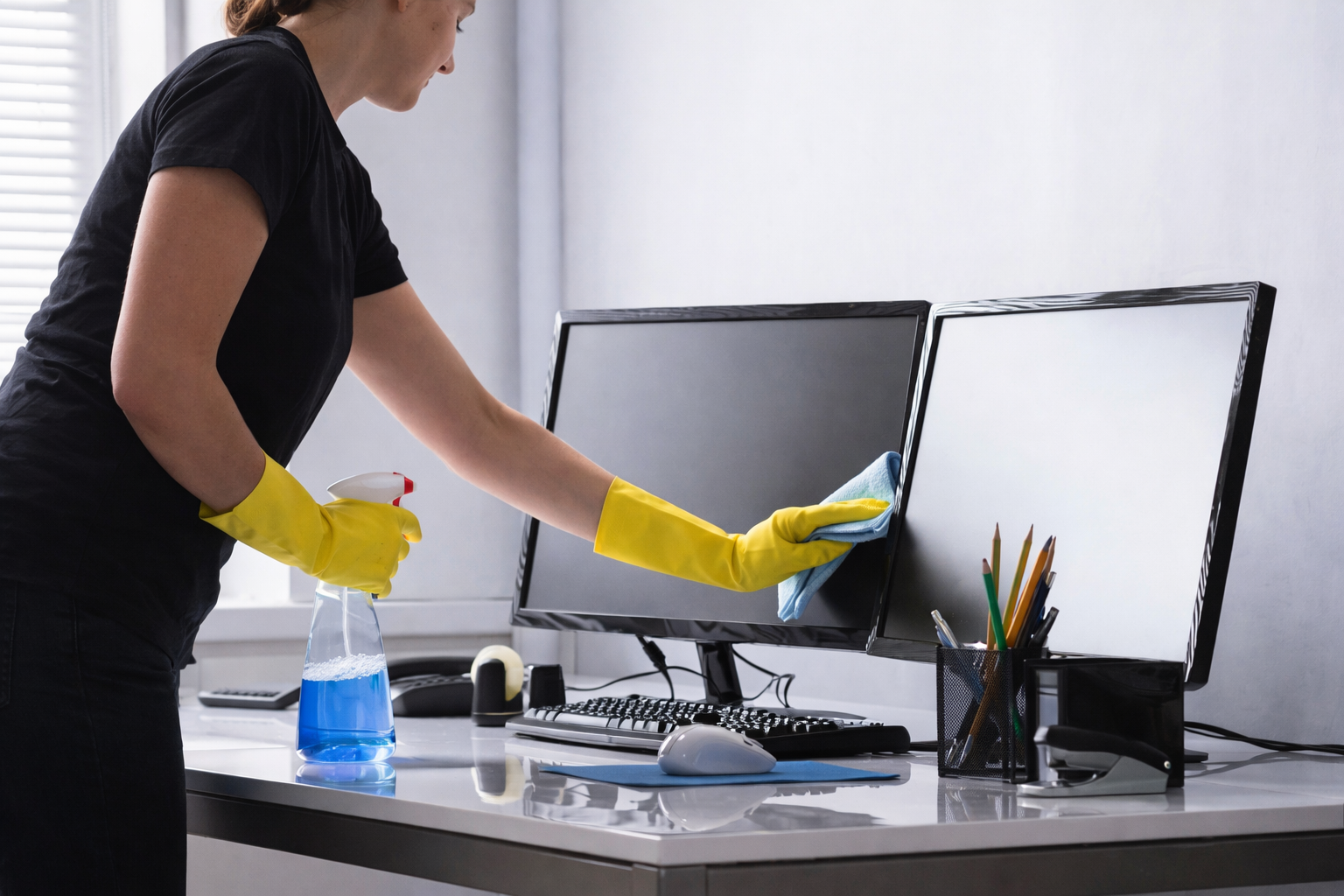
Commercial cleaning helps keep workspaces orderly by addressing everyday messes before they become persistent problems. Depending on the agreement, services may include dusting accessible surfaces, vacuuming, mopping, emptying waste containers, and cleaning shared tables and common areas.
A cleaner environment can make it easier for employees to focus on their responsibilities without being distracted by neglected surroundings. It also reduces the need for staff members to spend work time coordinating or completing routine facility cleaning.
Employees still play a role in keeping their own spaces organized, but professional cleaning provides the regular maintenance needed to support a more orderly workplace.
3. Keep Restrooms and Shared Facilities Maintained
Restrooms and break rooms require consistent attention because many people may use them throughout the day. When maintenance falls behind, these areas can develop unpleasant odors, visible residue, overflowing bins, and empty dispensers.
Professional commercial cleaning can include cleaning sinks, toilets, counters, mirrors, floors, and frequently touched fixtures. Break room maintenance may involve wiping tables and counters, cleaning sinks, removing trash, and maintaining floors.
The appropriate schedule depends on how heavily each space is used. A busy office or customer-facing business may need daily restroom service, while a smaller facility may require a different arrangement.
Maintaining these areas helps businesses provide a more dependable experience for employees and visitors. It also allows managers to establish clear expectations for which tasks are completed and how frequently supplies are checked or replenished.
4. Protect the Appearance of Commercial Floors
Commercial flooring experiences regular wear from foot traffic, furniture movement, spills, and debris tracked indoors. Without consistent maintenance, floors can become dull, stained, or visibly dirty.
Plymouth businesses also need to account for Minnesota's changing seasons. During winter, snow, slush, moisture, and road salt can enter through building entrances and spread into hallways, reception areas, and offices.
Routine floor care may include sweeping, vacuuming, damp mopping, and machine scrubbing where appropriate. Depending on the surface and service agreement, businesses may also benefit from periodic carpet cleaning, tile and grout cleaning, or specialized hard-floor maintenance.
A suitable cleaning schedule helps manage soil before it accumulates. Using methods appropriate for the flooring material can also help businesses avoid unnecessary wear caused by unsuitable products or cleaning techniques.
5. Support Better Cleaning and Hygiene Practices
Commercial properties contain frequently touched surfaces such as door handles, shared tables, light switches, counters, and restroom fixtures. These areas can accumulate dirt and require regular attention.
Professional cleaning helps remove visible soil and maintain commonly used surfaces. Where appropriate, a cleaning program may also include targeted disinfection using suitable products according to their instructions.
Cleaning and disinfecting are different tasks. Cleaning removes dirt and debris, while disinfection uses products designed to reduce specified microorganisms on treated surfaces. The right approach depends on the surface, the facility, and the business's requirements.
Businesses should clarify which areas receive routine cleaning, whether targeted disinfection is included, and what additional procedures may be needed for specialized environments. This is particularly important for facilities with specific sanitation requirements.
6. Reduce the Burden of Routine Facility Maintenance
Business owners and managers already have many responsibilities, including scheduling employees, serving customers, managing inventory, and coordinating daily operations. When cleaning tasks are left unassigned or handled inconsistently, facility maintenance can become another source of stress.
Hiring a commercial cleaning company gives businesses a defined process for recurring cleaning. Instead of coordinating every task internally, managers can agree on a schedule, establish a checklist, and determine which areas need regular attention.
This arrangement can make maintenance more predictable. It also provides a clear way to communicate concerns if a task is missed or a facility's needs change.
Before service begins, businesses should confirm which tasks are included, who provides cleaning supplies, how additional work is handled, and how service concerns are reported. Clear expectations help prevent misunderstandings and support a more dependable working relationship.
7. Maintain Cleaner Customer-Facing Areas
Retail stores, showrooms, reception areas, restaurants, and other customer-facing facilities need to remain presentable while people continue using them. Customers may notice dirty entrance floors, fingerprints on glass, untidy waiting areas, or neglected restrooms.
Commercial cleaning can help businesses maintain these spaces through regular floor care, surface cleaning, trash removal, glass maintenance, and restroom upkeep.
The frequency should reflect customer traffic. A busy retail location may need more frequent attention to entrances and floors than a professional office with limited visitors. Some facilities may also benefit from daytime maintenance for high-traffic areas in addition to scheduled cleaning after closing.
Keeping customer-facing areas maintained helps businesses provide a more consistent experience instead of allowing visible cleaning issues to accumulate between visits.
8. Adapt to Seasonal Cleaning Needs in Plymouth
Seasonal weather can change how much cleaning a commercial property requires. In Plymouth, winter conditions often bring snow, slush, moisture, and road salt into buildings. Spring may bring additional dirt and debris, while year-round foot traffic continues to affect floors and shared areas.
A seasonal cleaning plan can help businesses respond to these changing conditions. During winter, more frequent attention to entrance mats, lobby floors, and high-traffic corridors may be necessary. Additional floor care may be appropriate when visible residue accumulates.
Businesses can also schedule periodic deep cleaning to address areas that receive less attention during regular maintenance. These tasks may include detailed floor care, carpet cleaning, interior glass cleaning, and cleaning accessible edges and corners.
Adjusting the schedule according to actual conditions helps businesses maintain their facilities without assuming every area needs the same service frequency throughout the year.
9. Customize Cleaning to Match Your Facility
One of the main advantages of professional commercial cleaning is the ability to build a plan around a property's actual needs.
A small professional office may prioritize desks, meeting rooms, restrooms, and floors. A restaurant may need more detailed attention to dining areas, restrooms, and other agreed spaces. A warehouse may have different priorities involving floor debris, employee facilities, and shared work areas.
Rather than purchasing every available service, businesses can identify their most important cleaning requirements and select an appropriate schedule.
A customized plan should consider:
- The size and layout of the facility
- Employee and visitor traffic
- Flooring materials and maintenance needs
- Restroom and break room usage
- Operating hours and building access
- Seasonal cleaning challenges
- Tasks that require specialized equipment or additional service
Reviewing these factors helps businesses establish realistic expectations and choose services that provide practical value.
10. Support a Consistent Business Image
Maintaining a clean facility is an ongoing responsibility, not a one-time project. A building may look excellent immediately after a deep clean, but daily traffic, spills, dust, and waste quickly create new maintenance needs.
Recurring commercial cleaning helps businesses establish consistent standards across their properties. A written task list and regular schedule make it easier to identify responsibilities, review results, and address areas that need additional attention.
Consistency is particularly valuable for businesses that receive visitors regularly or operate multiple shifts. Employees and customers can expect the facility to receive routine care rather than relying on occasional cleanups when problems become noticeable.
Businesses should periodically review their cleaning plan as staffing levels, occupancy, operating hours, or facility requirements change.
How to Choose a Commercial Cleaning Company in Plymouth
Choosing a provider involves more than comparing prices. Businesses should understand exactly what the service includes and whether the proposed schedule fits their property.
Before signing an agreement, ask potential providers about their cleaning checklists, service frequency, staff training, quality checks, and communication procedures. Request a written scope of work that identifies the areas covered and explains which tasks require additional arrangements.
It is also important to discuss building access, security requirements, cleaning supplies, and the process for reporting concerns. If your facility needs specialized floor care, post-construction cleanup, or other detailed services, confirm whether those tasks are included or quoted separately.
A provider that communicates clearly and follows a defined process can make routine facility maintenance easier to manage.
Keep Your Plymouth Business Clean and Presentable
Professional commercial cleaning offers benefits beyond appearance. It helps businesses maintain shared spaces, care for floors, keep restrooms and break rooms in order, and establish a consistent approach to routine maintenance. A suitable cleaning plan can also account for seasonal conditions and the different ways commercial facilities are used.
Plymouth Commercial Cleaning can help local businesses identify cleaning services that fit their properties, schedules, and priorities. With a practical plan and clearly defined tasks, businesses can maintain a more professional environment while focusing on their daily operations.