Why Plymouth Businesses Need a Cleaning Plan That Keeps Up With the Way the City Works
From Busy Office Parks and Retail Areas to Minnesota Winters and Daily Commuter Traffic, Plymouth Commercial Properties Have Cleaning Challenges of Their Own

Plymouth is the kind of city where a business can be busy without always feeling crowded.
There are office buildings, medical practices, retail centers, restaurants, warehouses, professional services, and other commercial properties spread throughout the community. Employees may be coming in from across the west metro, customers are moving between businesses throughout the day, and deliveries are constantly coming and going.
All of that movement leaves something behind.
Dirt gets tracked through entrances. Break rooms get used. Restrooms see steady traffic. Glass doors collect fingerprints. Floors that looked great first thing in the morning may look completely different by late afternoon.
At Plymouth Commercial Cleaning, we believe the easiest way to keep a building looking good is to build the cleaning schedule around how people actually use it.
Plymouth Is a Working City
Plymouth has plenty of residential neighborhoods, lakes, parks, and trails, but it is also a major employment center in the western Twin Cities.
That means many commercial buildings are active from early morning until well into the evening.
You may have employees arriving before customers.
Then vendors show up.
Then deliveries.
Then meetings.
Then customers.
Then the afternoon shift comes in.
A building can see a surprising amount of activity before the workday is over.
That is why cleaning frequency should be based on actual traffic instead of simply saying every building gets the same service three nights a week.
The Commute Ends at Your Front Door
Major roads such as Highway 55, Interstate 494, and Highway 169 help connect Plymouth with the rest of the metro.
That is great for businesses.
It also means employees and customers may have spent plenty of time driving, walking through parking lots, and dealing with whatever Minnesota weather is doing that day before they enter your building.
Then everything on their shoes comes inside.
During a dry summer day, that may not be a big problem.
During January?
That is another story.
Snow, road salt, sand, and slush can completely change the condition of an entrance in a matter of hours.
Winter Floor Cleaning Is a Different Job
Minnesota winters are hard on commercial floors.
There is really no way around it.
Salt leaves behind a cloudy white residue.
Sand works its way into carpet.
Slush melts into puddles.
Wet entry mats eventually stop catching as much dirt.
Then people continue walking through the building and carry that mess farther down hallways and into common areas.
For Plymouth businesses, winter floor care may need to include:
- Frequent entrance vacuuming
- Hard floor mopping
- Salt residue removal
- Carpet spot cleaning
- Entry mat maintenance
- Floor edge cleaning
- Additional attention to high traffic walkways
The important thing is staying ahead of the buildup.
It is much easier to clean a little salt today than a month of salt later.
Office Buildings Can Look Clean While Still Needing Attention
Plymouth has a strong professional and corporate presence, and office cleaning is a little different from cleaning a busy restaurant or retail store.
An office may not look messy.
That does not mean it is not getting dirty.
Most of the buildup happens slowly.
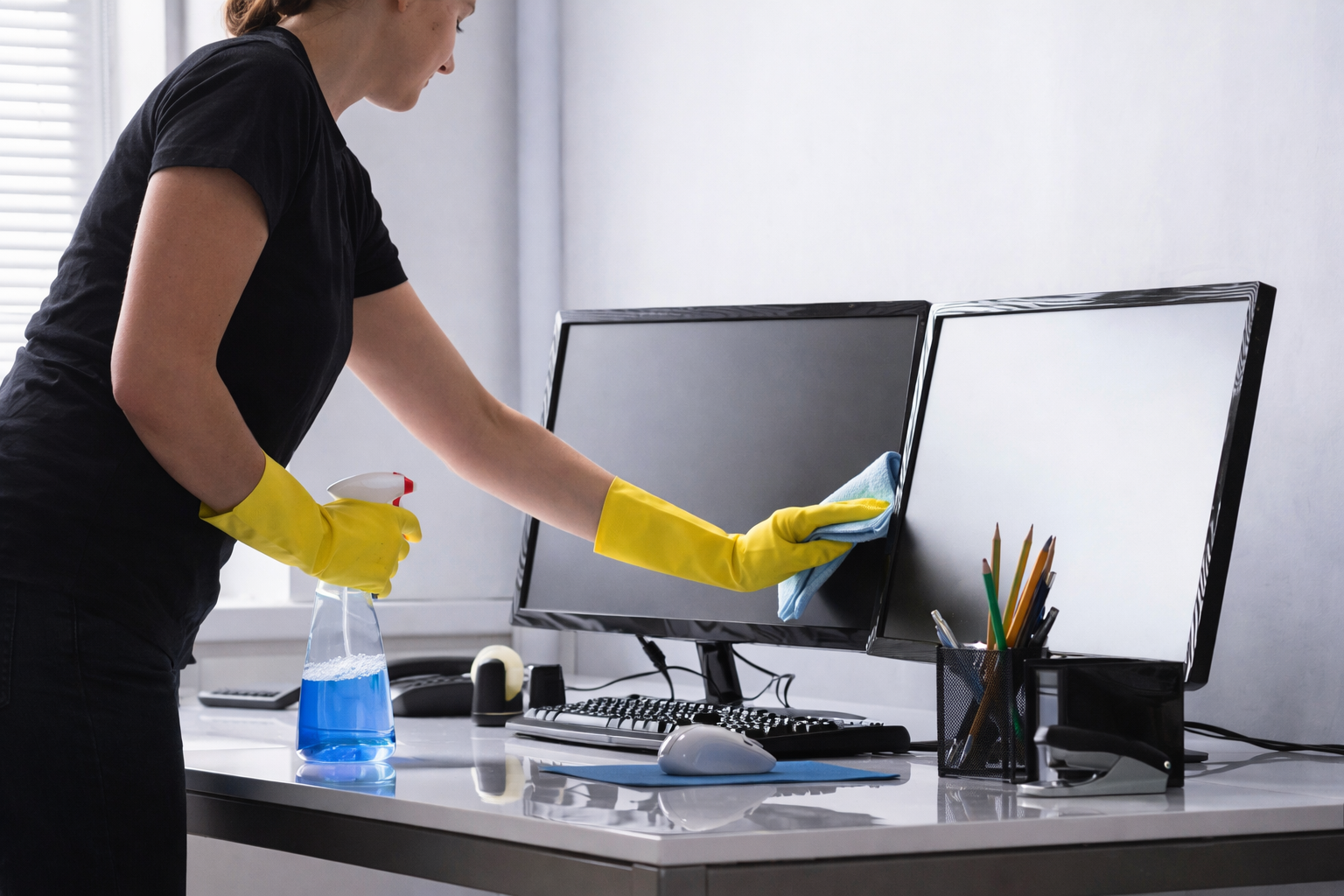
Dust appears around computer monitors.
Trash collects underneath desks.
Fingerprints show up on conference room doors.
Coffee splashes around the break room.
Carpets collect dirt from hundreds of footsteps.
Restrooms get used all day.
Nothing may look terrible, but after enough small things build up, the entire office begins to feel less cared for.
Regular cleaning prevents that gradual slide.
Conference Rooms Get More Use Than You Think
Conference rooms are easy to forget because they may sit empty for hours.
Then suddenly eight people are in there for a meeting.
Coffee gets brought in.
Someone eats lunch.
The whiteboard gets used.
Chairs are moved.
Hands touch the table, door handle, remote control, and shared equipment.
Then everyone leaves.
A conference room may still look fairly clean, but that does not mean it is ready for the next meeting.
Regular attention to tables, chairs, floors, glass, trash, and shared surfaces helps keep these spaces presentable for employees and visitors.
Break Rooms Are Where the Real Mess Usually Happens
If you want to know where employees spend time during the day, look at the break room.
Someone is always making coffee.
Someone is heating lunch.
Someone spills something and promises themselves they will clean it up later.
Then fifteen other people use the room.
By the end of the day, the refrigerator handle has been touched dozens of times, the microwave has seen better days, and there are crumbs hiding underneath the table.
It is normal.
The solution is simply keeping up with it.
A good break room cleaning routine can include:
- Countertop cleaning
- Sink cleaning
- Table wiping
- Appliance exterior cleaning
- Floor vacuuming or mopping
- Trash removal
- Cabinet handle cleaning
- High touch surface cleaning
Employees notice these areas because they use them every day.
Restrooms Need a Schedule Based on People, Not Square Footage
A small restroom can require more cleaning than a much larger office.
It all depends on traffic.
A restroom used by six employees is one thing.
A restroom used by fifty employees plus customers and visitors is something completely different.
Busy commercial restrooms can quickly develop:
- Water around sinks
- Soap residue
- Mirror spots
- Paper on floors
- Full trash containers
- Odors
- Dirty door handles
- Supply shortages
For some Plymouth businesses, one thorough cleaning every evening works well.
For others, the restroom may need additional checks during business hours.
The number of people using the space should determine the frequency.
Retail and Customer Facing Businesses Need to Think Differently
Retail stores, restaurants, medical offices, financial businesses, fitness facilities, and other customer facing properties have a different challenge.
The building has to stay presentable while people are still using it.
You cannot wait until Friday night to deal with a dirty entrance that customers have been walking through since Monday.
These businesses usually need more attention around:
- Entrances
- Customer floors
- Restrooms
- Waiting areas
- Counters
- Glass
- Door handles
- Trash
- High traffic areas
When customers are constantly moving through the building, cleaning has to keep pace with them.
Industrial and Warehouse Spaces Have Their Own Problems
Plymouth also has commercial and industrial properties that operate very differently from an office.
Warehouses and light industrial buildings may deal with dust, shipping debris, packaging materials, heavier floor traffic, loading areas, employee break rooms, and larger restroom facilities.
The office portion of the building may need traditional janitorial cleaning while warehouse areas require a completely different approach.
Again, one standard checklist does not fit every property.
It makes more sense to divide the building into areas and determine what each one actually needs.
Outdoor Activity Comes Indoors Too
Plymouth has plenty of parks, trails, lakes, and green space.
That is one of the things people enjoy about living and working in the area.
It also means outdoor conditions tend to follow people inside.
Spring can bring mud.
Summer can bring pollen and dust.
Fall brings leaves and damp debris.
Winter brings just about everything else.
Businesses near walking areas, parks, or heavily used outdoor spaces may notice seasonal dirt around entrances more quickly.
A flexible cleaning plan can adjust as those conditions change.
Small Details Make a Building Feel Cleaner
Most customers do not inspect a commercial building.
They simply experience it.
They notice whether the glass is clean.
They notice whether the floor looks cared for.
They notice how the restroom smells.
They notice whether the reception area feels dusty.
They notice a trash can that is overflowing.
These are small details, but together they create the overall feeling of the building.
A clean commercial property does not have to look brand new.
It just needs to feel maintained.
Not Everything Needs Daily Cleaning
Daily cleaning makes sense for certain areas.
Others can be handled weekly or periodically.
For example:
Often Daily
- Restrooms
- Trash
- Entrances
- Break rooms
- High traffic floors
- Customer areas
Weekly or Periodically
- Baseboards
- High dusting
- Interior glass
- Cabinet tops
- Low traffic rooms
- Detailed floor edges
- Vents and ledges
This kind of schedule keeps the important areas under control without wasting time cleaning spaces that simply do not need the same level of attention.
Your Cleaning Plan Should Change When Your Business Changes
Businesses grow.
You hire more employees.
Customer traffic increases.
You expand into additional space.
Operating hours change.
Maybe the office that once had twelve employees now has forty.
If the business changes but the cleaning schedule never does, eventually the cleaning will fall behind.
It is worth looking at the plan occasionally and asking:
Does this still fit the way our building operates today?
If not, change it.
Cleaning should adapt to the business.
Commercial Cleaning for Plymouth, MN Businesses
Plymouth Commercial Cleaning provides commercial cleaning services for offices, medical facilities, restaurants, retail businesses, warehouses, financial institutions, fitness centers, schools, churches, dealerships, and other commercial properties throughout Plymouth.
A corporate office may need daily restroom and break room service with less frequent detail cleaning.
A retail business may need more attention to floors, glass, and customer areas.
A warehouse may need an entirely different combination of services.
We believe the cleaning plan should reflect the property instead of giving every Plymouth business the same checklist.
Frequently Asked Questions
How Often Should a Plymouth Business Be Professionally Cleaned?
It depends on the amount of traffic and type of facility. Smaller offices may only need service several times a week, while busy customer facing businesses may benefit from daily cleaning.
Does Winter Increase Cleaning Needs in Plymouth?
Yes. Snow, road salt, sand, slush, and moisture can significantly increase entrance and floor cleaning needs during Minnesota winters.
Can Commercial Cleaning Be Done After Business Hours?
Yes. Evening cleaning works well for many Plymouth businesses because cleaners can work with fewer employees and customers in the building.
Do Office Buildings Need Daily Cleaning?
Not always. Larger offices and busy facilities may benefit from daily service, while smaller offices may stay well maintained with cleaning several times per week.
Can Different Areas Have Different Cleaning Frequencies?
Yes. In many buildings, that is the most practical approach. Restrooms and entrances might receive daily attention while conference rooms, baseboards, and other lower traffic areas are cleaned less frequently.
Need Commercial Cleaning in Plymouth?
A busy building is going to get dirty.
That is simply part of having employees, customers, deliveries, meetings, Minnesota weather, and everyday life moving through the property.
The goal is not to prevent every footprint or fingerprint.
It is to stay ahead of them.
Plymouth Commercial Cleaning can create a cleaning schedule based on how your facility actually operates, whether you need daily cleaning, several visits each week, or a customized plan for specific areas.
When the cleaning plan fits the business, keeping the building looking good becomes a lot easier.